
抗體
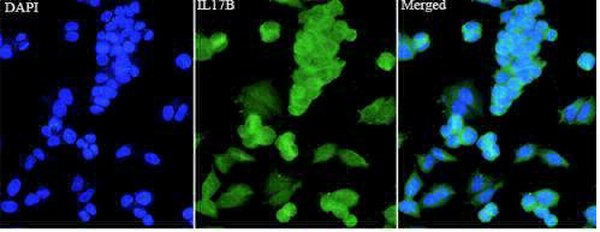
Anti IL17B polyclonal antibody
Anti IL17B polyclonal antibodyThe protein encoded by this gene is a T cell-derived cytokine that shares sequence similarity with IL17. This cytokine was reported to stimulate the release of TNF alpha (TNF) and IL1 beta (IL1B) from a monocytic cell line. Immunohistochemical analysis of several nerve tissues indicated that this cytokine is primarily localized to neuronal cell bodies.

Anti PPL polyclonal antibody
Anti PPL polyclonal antibodyThe protein encoded by this gene is a component of desmosomes and of the epidermal cornified envelope in keratinocytes. The N-terminal domain of this protein interacts with the plasma membrane and its C-terminus interacts with intermediate filaments. Through its rod domain, this protein forms complexes with envoplakin. This protein may serve as a link between the cornified envelope and desmosomes as well as intermediate filaments. AKT1/PKB, a protein kinase mediating a variety of cell growth and survival signaling processes, is reported to interact with this protein, suggesting a possible role for this protein as a localization signal in AKT1-mediated signaling.
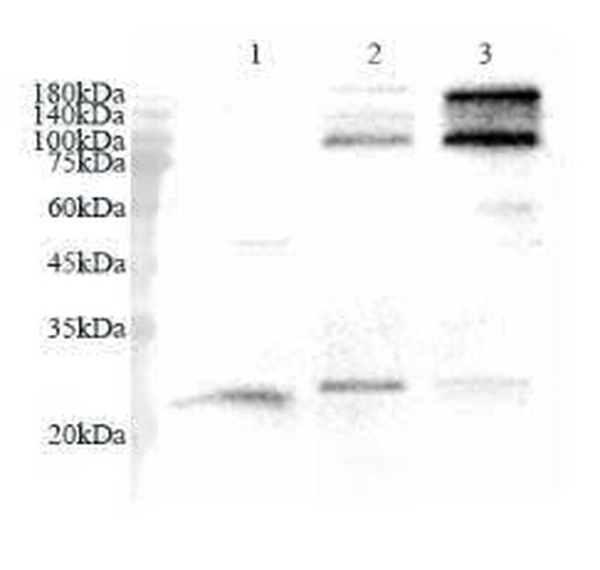
Anti GSTM2 polyclonal antibody
Anti GSTM2 polyclonal antibodyCytosolic and membrane-bound forms of glutathione S-transferase are encoded by two distinct supergene families. At present, eight distinct classes of the soluble cytoplasmic mammalian glutathione S-transferases have been identified: alpha, kappa, mu, omega, pi, sigma, theta and zeta. This gene encodes a glutathione S-transferase that belongs to the mu class. The mu class of enzymes functions in the detoxification of electrophilic compounds, including carcinogens, therapeutic drugs, environmental toxins and products of oxidative stress, by conjugation with glutathione. The genes encoding the mu class of enzymes are organized in a gene cluster on chromosome 1p13.3 and are known to be highly polymorphic. These genetic variations can change an individual's susceptibility to carcinogens and toxins as well as affect the toxicity and efficacy of certain drugs.

Anti PGK1 polyclonal antibody
Anti PGK1 polyclonal antibodyThe PGK1 gene encodes phosphoglycerate kinase-1, also known as ATP:3-phosphoglycerate 1-phosphotransferase (EC 2.7.2.3), which catalyzes the reversible conversion of 1,3-diphosphoglycerate to 3-phosphoglycerate during glycolysis, generating one molecule of ATP. It Belongs to the phosphoglycerate kinase family and defects in PGK1 are the cause of phosphoglycerate kinase 1 deficiency (PGK1D). PGK1 has 2 isoforms with the molecular mass of 45 kDa and 41 kDa.
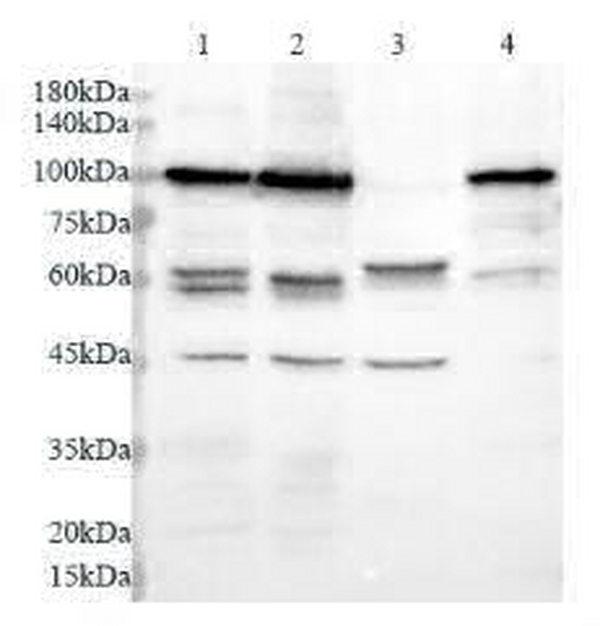
Anti NSUN2 polyclonal antibody
Anti NSUN2 polyclonal antibodyNSUN2, also known as SAKI or Misu (Myc-induced SUN-domain-containing protein) , is a methyltransferase which catalyses (cytosine-5-)-methylation of tRNA. NSUN2 is direct target gene of c-Myc and may act downstream of Myc to regulate epidermal cell growth and proliferation. NSUN2 is overexpressed in various cancer tissues and may be a valuable target for cancer therapy and a cancer diagnostic marker. Recently a splicing mutation in NSUN2 has been identified as the cause of a Dubowitz-like syndrome, an autosomal recessive disorder.
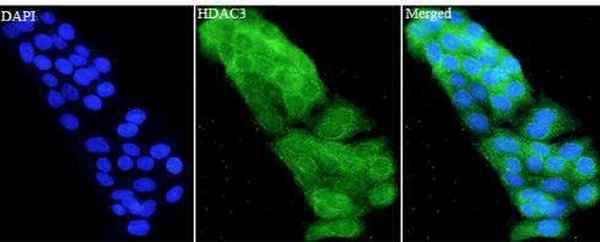
Anti HDAC3 polyclonal antibody
Anti HDAC3 polyclonal antibodyHistone acetylation/deacetylation alters chromosome structure and affects transcription factor access to DNA. Histone deacetylase (HDAC) and histone acetyltransferase (HAT) are enzymes that regulate transcription by selectively deacetylating or acetylating the (-amino groups of lysines located near the amino termini of core histone proteins. At least 4 classes of HDAC were identified. HDAC3 is a class I HDAC. HDAC3 has histone deacetylase activity and may participate in the regulation of transcription through its binding with the zinc-finger transcription factor YY1. HDAC3 can also down-regulate p53 function and thus modulate cell growth and apoptosis. The gene encoding HDAC3 is regarded as a potential tumor suppressor gene. This antibody is a rabbit polyclonal antibody raised against an internal region of human HDAC3.
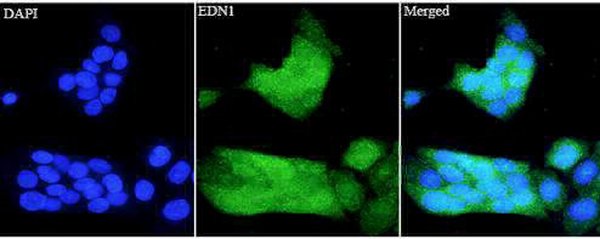
Anti EDN1 polyclonal antibody
Anti EDN1 polyclonal antibodyEDN1, also named as Endothelin-1, PPET1 and ET-1, belongs to the endothelin/sarafotoxin family. Endothelins are endothelium-derived vasoconstrictor peptides. Emerging basic science, and animal and human data all suggest that EDN1 is a potentially important contributor in the pathobiology of fibrosing disorders, including those that affect the lung(PMID:20055532).
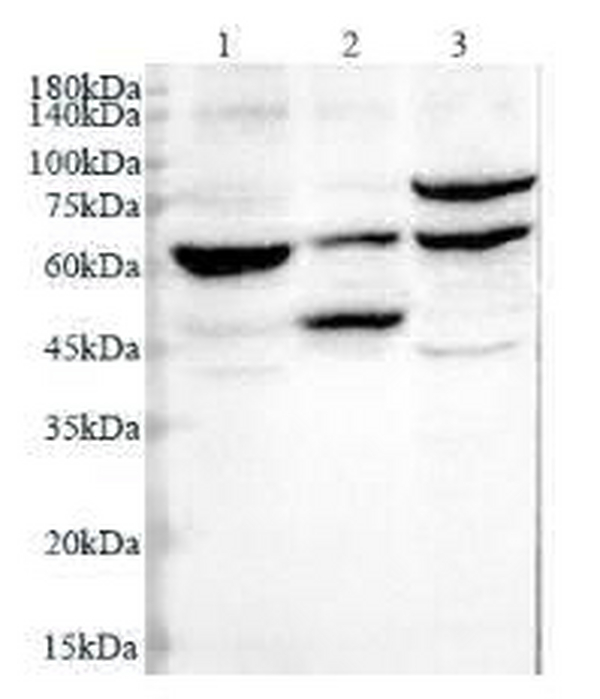
Anti CTSD polyclonal antibody
Anti CTSD polyclonal antibodyCTSD(Cathepsin D) is also named as CPSD,belongs to the peptidase A1 family.It is ubiquitously expressed and is involved in proteolytic degradation, cell invasion, and apoptosis. The prepro-CTSD isoform has a molecular mass of 52 kDa, the pro-CTSD 48 kDa and the mature CTSD 32 kDa(PMID:10917609). It is a lysosomal acid protease found in neutrophils and monocytes and involved in the pathogenesis of several diseases such as breast cancer and possibly Alzheimer disease.Defects in CTSD are the cause of neuronal ceroid lipofuscinosis type 10 (CLN10).This antibody is specific to CTSD.

Anti IRF5 polyclonal antibody
Anti IRF5 polyclonal antibodyIRF5, also named as SLEB10, contians one IRF tryptophan pentad repeat DNA-binding domain and belongs to the IRF family. It is a transcription factor involved in the induction of interferons IFNA and INFB and inflammatory cytokines upon virus infection. It is activated by TLR7 or TLR8 signaling. Genetic variations in IRF5 are associated with susceptibility to inflammatory bowel disease type 14 (IBD14) and systemic lupus erythematosus type 10 (SLEB10). IRF5 is also used as M1 marcrophage lineage marker. Alternative splice variant encoding different isoforms exist.
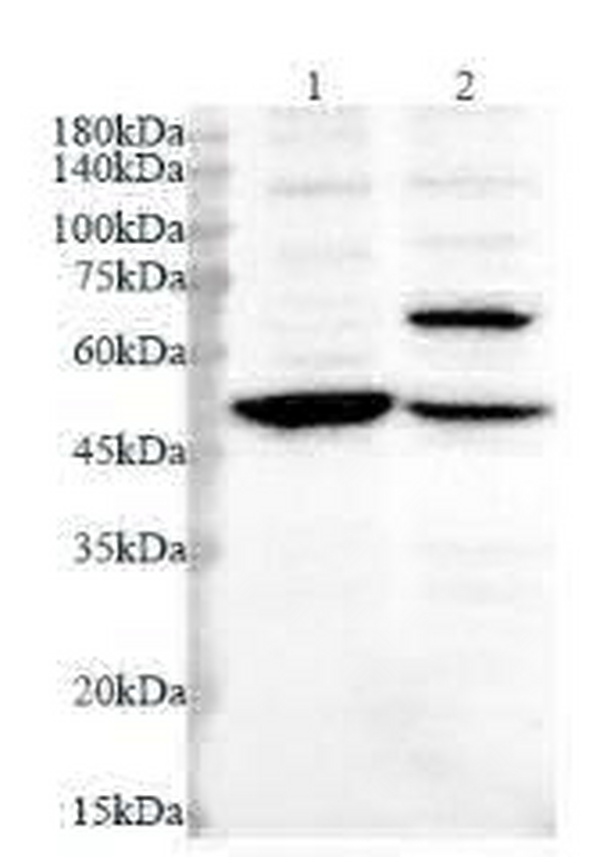
Anti PDHX polyclonal antibody
Anti PDHX polyclonal antibodyPDHX is component X of the pyruvate dehydrogenase (PDH) complex. It is required for anchoring dihydrolipoamide dehydrogenase (E3) to the dihydrolipoamide transacetylase (E2) core of the pyruvate dehydrogenase complexes of eukaryotes. This specific binding is essential for a functional PDH complex. PDHX is expressed in the mithochondrion.
最新動態(tài)
-
Anti-GNGT1 KL20092-001(50ul)
2021-10-11 -
Anti-GNGT1 antibody(50ul) KL20093-001
2021-10-11 -
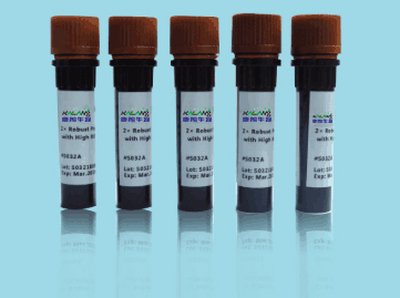
α-tubulin mouse Monoclonal Antibody
2021-01-08 -
α-tubulin mouse Monoclonal Antibody(8F11)
2021-01-08
熱門標(biāo)簽
- Histone H3 rabbit Polyclonal Antibody Histone H3抗體
- EGFR rabbit Polyclonal Antibody EGFR抗體
- Cy3 Conjugated
- AbFluor? 555 Conjugated
- AbFluor? 680 Conjugated
- AbFluor? 350 Conjugated
- AbFluor? 647 Conjugated
- AbFluor? 594 Conjugated
- AbFluor? 405 Conjugated
- Cy5 Conjugated
- AbFluor? 488 Conjugated
- Cyclophilin B抗體 Cyclophilin B Monoclonal Antibody(2B10)
- COX IV抗體 COX IV Monoclonal Antibody(6C8)
- PCNA抗體 PCNA Monoclonal Antibody(12D10)
- FAK rabbit Polyclonal Antibody FAK抗體
QQ:3002763590
電話:021-61998208

掃碼關(guān)注微信公眾號