
抗體
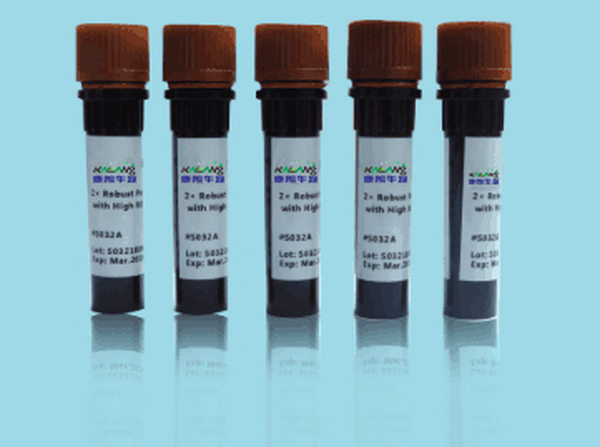
E2F-5 rabbit Polyclonal Antibody
E2F-5抗體應用:Western Blot: 1/500 - 1/2000. ELISA: 1/20000. E2F transcription factor 5(E2F5) Homo sapiens The protein encoded by this gene is a member of the E2F family of transcription factors. The E2F family plays a crucial role in the control of cell cycle and action of tumor suppressor proteins and is also a target of the transforming proteins of small DNA tumor viruses. The E2F proteins contain several evolutionarily conserved domains that are present in most members of the family. These domains include a DNA binding domain, a dimerization domain which determines interaction with the differentiation regulated transcription factor proteins (DP), a transactivation domain enriched in acidic amino acids, and a tumor suppressor protein association domain which is embedded within the transactivation domain. This protein is differentially phosphorylated and is expressed in a wide variety of human tissues. It has higher identity to E2F4 than to other family members. Both this protein and E2F
E2F-6 rabbit Polyclonal Antibody
E2F-6 抗體應用:Western Blot: 1/500 - 1/2000. Immunohistochemistry: 1/100 - 1/300. ELISA: 1/20000. E2F transcription factor 6(E2F6) Homo sapiens This gene encodes a member of a family of transcription factors that play a crucial role in the control of the cell cycle. The protein encoded by this gene lacks the transactivation and tumor suppressor protein association domains found in other family members, and contains a modular suppression domain that functions in the inhibition of transcription. It interacts in a complex with chromatin modifying factors. There are pseudogenes for this gene on chromosomes 22 and X. Alternative splicing results in multiple transcript variants. [provided by RefSeq, May 2013],
E4BP4 rabbit Polyclonal Antibody
E4BP4抗體應用:Western Blot: 1/500 - 1/2000. Immunofluorescence: 1/200 - 1/1000. ELISA: 1/20000. nuclear factor, interleukin 3 regulated(NFIL3) Homo sapiens The protein encoded by this gene is a transcriptional regulator that binds as a homodimer to activating transcription factor (ATF) sites in many cellular and viral promoters. The encoded protein represses PER1 and PER2 expression and therefore plays a role in the regulation of circadian rhythm. Three transcript variants encoding the same protein have been found for this gene. [provided by RefSeq, Feb 2014],
EAAT1 rabbit Polyclonal Antibody
EAAT1抗體應用:Western Blot: 1/500 - 1/2000. ELISA: 1/10000. solute carrier family 1 member 3(SLC1A3) Homo sapiens This gene encodes a member of a member of a high affinity glutamate transporter family. This gene functions in the termination of excitatory neurotransmission in central nervous system. Mutations are associated with episodic ataxia, Type 6. Alternative splicing results in multiple transcript variants.[provided by RefSeq, Feb 2014],
EAAT3 rabbit Polyclonal Antibody
EAAT3抗體應用:Western Blot: 1/500 - 1/2000. ELISA: 1/10000. solute carrier family 1 member 1(SLC1A1) Homo sapiens This gene encodes a member of the high-affinity glutamate transporters that play an essential role in transporting glutamate across plasma membranes. In brain, these transporters are crucial in terminating the postsynaptic action of the neurotransmitter glutamate, and in maintaining extracellular glutamate concentrations below neurotoxic levels. This transporter also transports aspartate, and mutations in this gene are thought to cause dicarboxylicamino aciduria, also known as glutamate-aspartate transport defect. [provided by RefSeq, Mar 2010],
EAF6 rabbit Polyclonal Antibody
EAF6抗體應用:WB 1:500-2000 This gene encodes a nuclear protein involved in transcriptional activation. The encoded protein may form a component of several different histone acetyltransferase complexes. There is a pseudogene for this gene on chromosome 2. Alternative splicing results in multiple transcript variants. [provided by RefSeq, Aug 2012],
EAT-2 rabbit Polyclonal Antibody
EAT-2抗體應用:Immunohistochemistry: 1/100 - 1/300. ELISA: 1/40000. SH2 domain containing 1B(SH2D1B) Homo sapiens By binding phosphotyrosines through its free SRC (MIM 190090) homology-2 (SH2) domain, EAT2 regulates signal transduction through receptors expressed on the surface of antigen-presenting cells (Morra et al., 2001 [PubMed 11689425]).[supplied by OMIM, Mar 2008],
Ebi3 rabbit Polyclonal Antibody
Ebi3抗體應用:Western Blot: 1/500 - 1/2000. ELISA: 1/10000. Epstein-Barr virus induced 3(EBI3) Homo sapiens This gene was identified by its induced expression in B lymphocytes in response Epstein-Barr virus infection. It encodes a secreted glycoprotein belonging to the hematopoietin receptor family, and heterodimerizes with a 28 kDa protein to form interleukin 27 (IL-27). IL-27 regulates T cell and inflammatory responses, in part by activating the Jak/STAT pathway of CD4+ T cells. [provided by RefSeq, Sep 2008],
EBP1 rabbit Polyclonal Antibody
EBP1抗體應用:Western Blot: 1/500 - 1/2000. ELISA: 1/40000. proliferation-associated 2G4(PA2G4) Homo sapiens This gene encodes an RNA-binding protein that is involved in growth regulation. This protein is present in pre-ribosomal ribonucleoprotein complexes and may be involved in ribosome assembly and the regulation of intermediate and late steps of rRNA processing. This protein can interact with the cytoplasmic domain of the ErbB3 receptor and may contribute to transducing growth regulatory signals. This protein is also a transcriptional co-repressor of androgen receptor-regulated genes and other cell cycle regulatory genes through its interactions with histone deacetylases. This protein has been implicated in growth inhibition and the induction of differentiation of human cancer cells. Six pseudogenes, located on chromosomes 3, 6, 9, 18, 20 and X, have been identified. [provided by RefSeq, Jul 2008],
最新動態(tài)
-
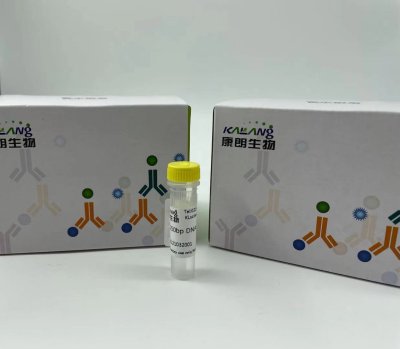
Anti-GNGT1 KL20092-001(50ul)
2021-10-11 -
Anti-GNGT1 antibody(50ul) KL20093-001
2021-10-11 -
α-tubulin mouse Monoclonal Antibody
2021-01-08 -
α-tubulin mouse Monoclonal Antibody(8F11)
2021-01-08
熱門標簽
- Histone H3 rabbit Polyclonal Antibody Histone H3抗體
- EGFR rabbit Polyclonal Antibody EGFR抗體
- Cy3 Conjugated
- AbFluor? 555 Conjugated
- AbFluor? 680 Conjugated
- AbFluor? 350 Conjugated
- AbFluor? 647 Conjugated
- AbFluor? 594 Conjugated
- AbFluor? 405 Conjugated
- Cy5 Conjugated
- AbFluor? 488 Conjugated
- Cyclophilin B抗體 Cyclophilin B Monoclonal Antibody(2B10)
- COX IV抗體 COX IV Monoclonal Antibody(6C8)
- PCNA抗體 PCNA Monoclonal Antibody(12D10)
- FAK rabbit Polyclonal Antibody FAK抗體
QQ:3002763590
電話:021-61998208

掃碼關(guān)注微信公眾號