
抗體
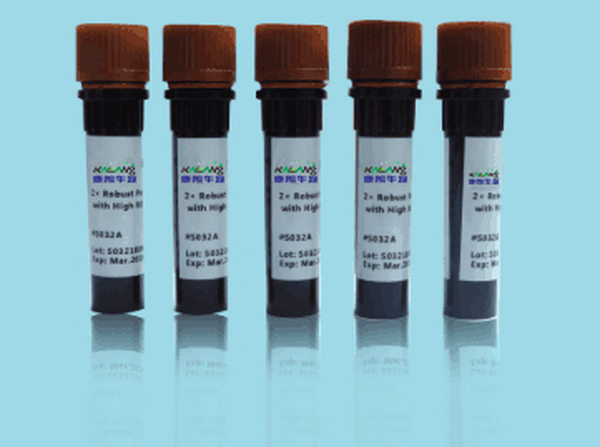
GLP-1R rabbit Polyclonal Antibody
GLP-1R抗體應用:Western Blot: 1/500 - 1/2000. Immunofluorescence: 1/200 - 1/1000. ELISA: 1/5000. glucagon like peptide 1 receptor(GLP1R) Homo sapiens This gene encodes a 7-transmembrane protein that functions as a receptor for glucagon-like peptide 1 (GLP-1) hormone, which stimulates glucose-induced insulin secretion. This receptor, which functions at the cell surface, becomes internalized in response to GLP-1 and GLP-1 analogs, and it plays an important role in the signaling cascades leading to insulin secretion. It also displays neuroprotective effects in animal models. Polymorphisms in this gene are associated with diabetes. The protein is an important drug target for the treatment of type 2 diabetes and stroke. Alternative splicing of this gene results in multiple transcript variants. [provided by RefSeq, Apr 2016],
Glucagon Receptor rabbit Polyclonal Antibody
Glucagon Receptor抗體應用:Western Blot: 1/500 - 1/2000. Immunofluorescence: 1/200 - 1/1000. ELISA: 1/5000. glucagon receptor(GCGR) Homo sapiens The protein encoded by this gene is a glucagon receptor that is important in controlling blood glucose levels. Defects in this gene are a cause of non-insulin-dependent diabetes mellitus (NIDDM).[provided by RefSeq, Jan 2010],
FKBP1A/B rabbit Polyclonal Antibody
FKBP1A/B抗體應用:IHC-p 1:50-200, WB 1:500-2000 FK506 binding protein 1A(FKBP1A) Homo sapiens The protein encoded by this gene is a member of the immunophilin protein family, which play a role in immunoregulation and basic cellular processes involving protein folding and trafficking. The protein is a cis-trans prolyl isomerase that binds the immunosuppressants FK506 and rapamycin. It interacts with several intracellular signal transduction proteins including type I TGF-beta receptor. It also interacts with multiple intracellular calcium release channels, and coordinates multi-protein complex formation of the tetrameric skeletal muscle ryanodine receptor. In mouse, deletion of this homologous gene causes congenital heart disorder known as noncompaction of left ventricular myocardium. Multiple alternatively spliced variants, encoding the same protein, have been identified. The human genome contains five pseudogenes related to this gene, at least one of which is transcribed. [provided b
FKBP1B Polyclona Antibody
FKBP1B抗體應用:IHC-p 1:50-200, ELISA(peptide)1:5000-20000 FK506 binding protein 1B(FKBP1B) Homo sapiens The protein encoded by this gene is a member of the immunophilin protein family, which play a role in immunoregulation and basic cellular processes involving protein folding and trafficking. This encoded protein is a cis-trans prolyl isomerase that binds the immunosuppressants FK506 and rapamycin. It is highly similar to the FK506-binding protein 1A. Its physiological role is thought to be in excitation-contraction coupling in cardiac muscle. There are two alternatively spliced transcript variants of this gene encoding different isoforms. [provided by RefSeq, Jul 2008],
FKBP7 rabbit Polyclonal Antibody
FKBP7抗體應用:WB 1:500-2000 The protein encoded by this gene belongs to the FKBP-type peptidyl-prolyl cis/trans isomerase (PPIase) family. Members of this family exhibit PPIase activity and function as molecular chaperones. A similar protein in mouse is located in the endoplasmic reticulum and binds calcium. [provided by RefSeq, Jul 2008],
FKBPL rabbit Polyclonal Antibody
FKBPL抗體應用:Western Blot: 1/500 - 1/2000. Immunohistochemistry: 1/100 - 1/300. ELISA: 1/20000. FK506 binding protein like(FKBPL) Homo sapiens The protein encoded by this gene has similarity to the immunophilin protein family, which play a role in immunoregulation and basic cellular processes involving protein folding and trafficking. The encoded protein is thought to have a potential role in the induced radioresistance. Also it appears to have some involvement in the control of the cell cycle. [provided by RefSeq, Jul 2008],
FKHRL1 rabbit Polyclonal Antibody
FKHRL1抗體應用:WB 1:500-2000, ELISA 1:10000-20000 forkhead box O3(FOXO3) Homo sapiens This gene belongs to the forkhead family of transcription factors which are characterized by a distinct forkhead domain. This gene likely functions as a trigger for apoptosis through expression of genes necessary for cell death. Translocation of this gene with the MLL gene is associated with secondary acute leukemia. Alternatively spliced transcript variants encoding the same protein have been observed. [provided by RefSeq, Jul 2008],
FKRP rabbit Polyclonal Antibody
FKRP抗體應用:Western Blot: 1/500 - 1/2000. Immunofluorescence: 1/200 - 1/1000. ELISA: 1/20000. fukutin related protein(FKRP) Homo sapiens This gene encodes a protein which is targeted to the medial Golgi apparatus and is necessary for posttranslational modification of dystroglycan. Mutations in this gene have been associated with congenital muscular dystrophy, mental retardation, and cerebellar cysts. Several alternatively spliced transcript variants of this gene have been described, but the full-length nature of some of these variants has not been determined. [provided by RefSeq, Oct 2008],
Flg rabbit Polyclonal Antibody
Flg抗體應用:Western Blot: 1/500 - 1/2000. Immunofluorescence: 1/200 - 1/1000. ELISA: 1/5000. fibroblast growth factor receptor 1(FGFR1) Homo sapiens The protein encoded by this gene is a member of the fibroblast growth factor receptor (FGFR) family, where amino acid sequence is highly conserved between members and throughout evolution. FGFR family members differ from one another in their ligand affinities and tissue distribution. A full-length representative protein consists of an extracellular region, composed of three immunoglobulin-like domains, a single hydrophobic membrane-spanning segment and a cytoplasmic tyrosine kinase domain. The extracellular portion of the protein interacts with fibroblast growth factors, setting in motion a cascade of downstream signals, ultimately influencing mitogenesis and differentiation. This particular family member binds both acidic and basic fibroblast growth factors and is involved in limb induction. Mutations in this gene have been associated with Pf
最新動態(tài)
-
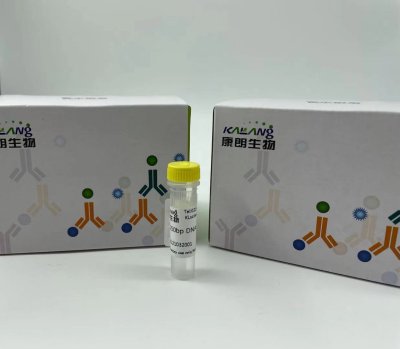
Anti-GNGT1 KL20092-001(50ul)
2021-10-11 -
Anti-GNGT1 antibody(50ul) KL20093-001
2021-10-11 -
α-tubulin mouse Monoclonal Antibody
2021-01-08 -
α-tubulin mouse Monoclonal Antibody(8F11)
2021-01-08
熱門標簽
- Histone H3 rabbit Polyclonal Antibody Histone H3抗體
- EGFR rabbit Polyclonal Antibody EGFR抗體
- Cy3 Conjugated
- AbFluor? 555 Conjugated
- AbFluor? 680 Conjugated
- AbFluor? 350 Conjugated
- AbFluor? 647 Conjugated
- AbFluor? 594 Conjugated
- AbFluor? 405 Conjugated
- Cy5 Conjugated
- AbFluor? 488 Conjugated
- Cyclophilin B抗體 Cyclophilin B Monoclonal Antibody(2B10)
- COX IV抗體 COX IV Monoclonal Antibody(6C8)
- PCNA抗體 PCNA Monoclonal Antibody(12D10)
- FAK rabbit Polyclonal Antibody FAK抗體
QQ:3002763590
電話:021-61998208

掃碼關注微信公眾號