
多克隆抗體
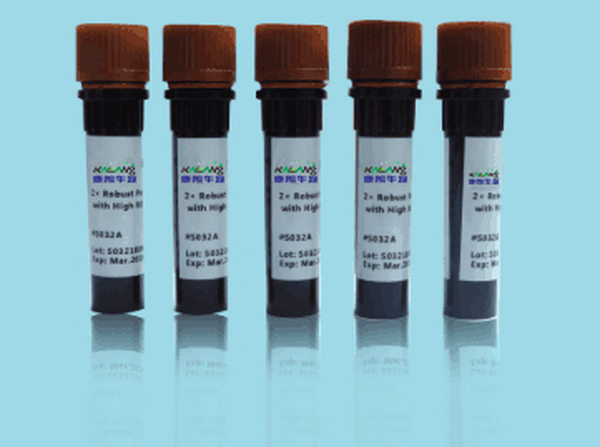
CD168 rabbit Polyclonal Antibody
CD168抗體應(yīng)用:WB 1:500-2000,IHC-p 1:500-200, ELISA 1:10000-20000 hyaluronan mediated motility receptor(HMMR) Homo sapiens The protein encoded by this gene is involved in cell motility. It is expressed in breast tissue and together with other proteins, it forms a complex with BRCA1 and BRCA2, thus is potentially associated with higher risk of breast cancer. Alternatively spliced transcript variants encoding different isoforms have been noted for this gene. [provided by RefSeq, Dec 2008],
CD168 rabbit Polyclonal Antibody
CD168抗體應(yīng)用:Western Blot: 1/500 - 1/2000. Immunohistochemistry: 1/100 - 1/300. ELISA: 1/40000. hyaluronan mediated motility receptor(HMMR) Homo sapiens The protein encoded by this gene is involved in cell motility. It is expressed in breast tissue and together with other proteins, it forms a complex with BRCA1 and BRCA2, thus is potentially associated with higher risk of breast cancer. Alternatively spliced transcript variants encoding different isoforms have been noted for this gene. [provided by RefSeq, Dec 2008],
CD169 rabbit Polyclonal Antibody
CD169抗體應(yīng)用:Western Blot: 1/500 - 1/2000. ELISA: 1/20000. sialic acid binding Ig like lectin 1(SIGLEC1) Homo sapiens This gene encodes a member of the immunoglobulin superfamily. The encoded protein is a lectin-like adhesion molecule that binds glycoconjugate ligands on cell surfaces in a sialic acid-dependent manner. It is a type I transmembrane protein expressed only by a subpopulation of macrophages and is involved in mediating cell-cell interactions. Alternative splicing produces a transcript variant encoding an isoform that is soluble rather than membrane-bound; however, the full-length nature of this variant has not been determined. [provided by RefSeq, Jul 2008],
CD172b rabbit Polyclonal Antibody
CD172b抗體應(yīng)用:Western Blot: 1/500 - 1/2000. ELISA: 1/5000. signal regulatory protein beta 1(SIRPB1) Homo sapiens The protein encoded by this gene is a member of the signal-regulatory-protein (SIRP) family, and also belongs to the immunoglobulin superfamily. SIRP family members are receptor-type transmembrane glycoproteins known to be involved in the negative regulation of receptor tyrosine kinase-coupled signaling processes. This protein was found to interact with TYROBP/DAP12, a protein bearing immunoreceptor tyrosine-based activation motifs. This protein was also reported to participate in the recruitment of tyrosine kinase SYK. Multiple transcript variants encoding different isoforms have been found for this gene. [provided by RefSeq, Feb 2009],
CD172g rabbit Polyclonal Antibody
CD172g抗體應(yīng)用:Western Blot: 1/500 - 1/2000. ELISA: 1/10000. signal regulatory protein gamma(SIRPG) Homo sapiens The protein encoded by this gene is a member of the signal-regulatory protein (SIRP) family, and also belongs to the immunoglobulin superfamily. SIRP family members are receptor-type transmembrane glycoproteins known to be involved in the negative regulation of receptor tyrosine kinase-coupled signaling processes. Alternatively spliced transcript variants encoding different isoforms have been described. [provided by RefSeq, Jul 2008],
CD177 rabbit Polyclonal Antibody
CD177抗體應(yīng)用:Western Blot: 1/500 - 1/2000. IHC-p: 1:100-300 ELISA: 1/20000. CD177 molecule(CD177) Homo sapiens This gene encodes a glycosyl-phosphatidylinositol (GPI)-linked cell surface glycoprotein that plays a role in neutrophil activation. The protein can bind platelet endothelial cell adhesion molecule-1 and function in neutrophil transmigration. Mutations in this gene are associated with myeloproliferative diseases. Over-expression of this gene has been found in patients with polycythemia rubra vera. Autoantibodies against the protein may result in pulmonary transfusion reactions, and it may be involved in Wegener's granulomatosis. A related pseudogene, which is adjacent to this gene on chromosome 19, has been identified. [provided by RefSeq, Apr 2014],
CD179b rabbit Polyclonal Antibody
CD179b抗體應(yīng)用:Western Blot: 1/500 - 1/2000. ELISA: 1/10000. immunoglobulin lambda like polypeptide 1(IGLL1) Homo sapiens The preB cell receptor is found on the surface of proB and preB cells, where it is involved in transduction of signals for cellular proliferation, differentiation from the proB cell to the preB cell stage, allelic exclusion at the Ig heavy chain gene locus, and promotion of Ig light chain gene rearrangements. The preB cell receptor is composed of a membrane-bound Ig mu heavy chain in association with a heterodimeric surrogate light chain. This gene encodes one of the surrogate light chain subunits and is a member of the immunoglobulin gene superfamily. This gene does not undergo rearrangement. Mutations in this gene can result in B cell deficiency and agammaglobulinemia, an autosomal recessive disease in which few or no gamma globulins or antibodies are made. Two transcript variants encoding different isoforms have been found for this gene. [provided by RefSeq, Jul 2008
CD180 rabbit Polyclonal Antibody
CD180抗體應(yīng)用:Western Blot: 1/500 - 1/2000. ELISA: 1/10000. CD180 molecule(CD180) Homo sapiens CD180 is a cell surface molecule consisting of extracellular leucine-rich repeats (LRR) and a short cytoplasmic tail. The extracellular LRR is associated with a molecule called MD-1 and form the cell surface receptor complex, RP105/MD-1. It belongs to the family of pathogen receptors, Toll-like receptors (TLR). RP105/MD1, by working in concert with TLR4, controls B cell recognition and signaling of lipopolysaccharide (LPS), a membrane constituent of Gram-negative bacteria. [provided by RefSeq, Jul 2008],
CD19 rabbit Polyclonal Antibody
CD19抗體應(yīng)用:Western Blot: 1/500 - 1/2000. IHC-p: 1:100-1:300. ELISA: 1/10000. CD19 molecule(CD19) Homo sapiens Lymphocytes proliferate and differentiate in response to various concentrations of different antigens. The ability of the B cell to respond in a specific, yet sensitive manner to the various antigens is achieved with the use of low-affinity antigen receptors. This gene encodes a cell surface molecule which assembles with the antigen receptor of B lymphocytes in order to decrease the threshold for antigen receptor-dependent stimulation. [provided by RefSeq, Jul 2008],
CD19 rabbit Polyclonal Antibody
CD19抗體應(yīng)用:Western Blot: 1/500 - 1/2000. ELISA: 1/20000. CD19 molecule(CD19) Homo sapiens Lymphocytes proliferate and differentiate in response to various concentrations of different antigens. The ability of the B cell to respond in a specific, yet sensitive manner to the various antigens is achieved with the use of low-affinity antigen receptors. This gene encodes a cell surface molecule which assembles with the antigen receptor of B lymphocytes in order to decrease the threshold for antigen receptor-dependent stimulation. [provided by RefSeq, Jul 2008],
最新動(dòng)態(tài)
-
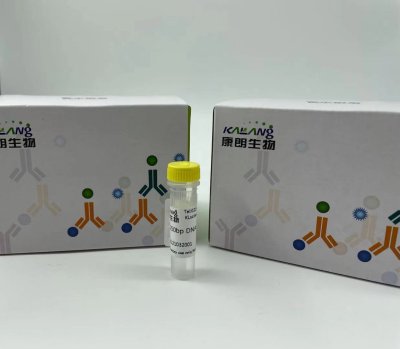
Anti-GNGT1 KL20092-001(50ul)
2021-10-11 -
Anti-GNGT1 antibody(50ul) KL20093-001
2021-10-11 -
MUC5AC (PT2058) mouse Monoclonal Antibody
2021-01-06 -
mOrange mouse Monoclonal Antibody(Mix)
2021-01-05
熱門標(biāo)簽
- Histone H3 rabbit Polyclonal Antibody Histone H3抗體
- EGFR rabbit Polyclonal Antibody EGFR抗體
- Cy3 Conjugated
- AbFluor? 555 Conjugated
- AbFluor? 680 Conjugated
- AbFluor? 350 Conjugated
- AbFluor? 647 Conjugated
- AbFluor? 594 Conjugated
- AbFluor? 405 Conjugated
- Cy5 Conjugated
- AbFluor? 488 Conjugated
- Cyclophilin B抗體 Cyclophilin B Monoclonal Antibody(2B10)
- COX IV抗體 COX IV Monoclonal Antibody(6C8)
- PCNA抗體 PCNA Monoclonal Antibody(12D10)
- FAK rabbit Polyclonal Antibody FAK抗體
QQ:3002763590
電話:021-61998208

掃碼關(guān)注微信公眾號(hào)