

客服電話:021-61998208
我們是專業(yè)的科研試劑供應(yīng)服務(wù)商
多克隆抗體
IGF-IIR rabbit Polyclonal Antibody
IGF-IIR抗體應(yīng)用:Western Blot: 1/500 - 1/2000. ELISA: 1/20000. insulin like growth factor 2 receptor(IGF2R) Homo sapiens This gene encodes a receptor for both insulin-like growth factor 2 and mannose 6-phosphate. The binding sites for each ligand are located on different segments of the protein. This receptor has various functions, including in the intracellular trafficking of lysosomal enzymes, the activation of transforming growth factor beta, and the degradation of insulin-like growth factor 2. Mutation or loss of heterozygosity of this gene has been association with risk of hepatocellular carcinoma. The orthologous mouse gene is imprinted and shows exclusive expression from the maternal allele; however, imprinting of the human gene may be polymorphic, as only a minority of individuals showed biased expression from the maternal allele (PMID:8267611). [provided by RefSeq, Nov 2015],
IGF-IIR rabbit Polyclonal Antibody
IGF-IIR抗體應(yīng)用:Immunohistochemistry: 1/100 - 1/300. Immunofluorescence: 1/200 - 1/1000. ELISA: 1/5000. insulin like growth factor 2 receptor(IGF2R) Homo sapiens This gene encodes a receptor for both insulin-like growth factor 2 and mannose 6-phosphate. The binding sites for each ligand are located on different segments of the protein. This receptor has various functions, including in the intracellular trafficking of lysosomal enzymes, the activation of transforming growth factor beta, and the degradation of insulin-like growth factor 2. Mutation or loss of heterozygosity of this gene has been association with risk of hepatocellular carcinoma. The orthologous mouse gene is imprinted and shows exclusive expression from the maternal allele; however, imprinting of the human gene may be polymorphic, as only a minority of individuals showed biased expression from the maternal allele (PMID:8267611). [provided by RefSeq, Nov 2015],
IGF-IIR rabbit Polyclonal Antibody
IGF-IIR抗體應(yīng)用:Immunohistochemistry: 1/100 - 1/300. Immunofluorescence: 1/200 - 1/1000. ELISA: 1/20000. insulin like growth factor 2 receptor(IGF2R) Homo sapiens This gene encodes a receptor for both insulin-like growth factor 2 and mannose 6-phosphate. The binding sites for each ligand are located on different segments of the protein. This receptor has various functions, including in the intracellular trafficking of lysosomal enzymes, the activation of transforming growth factor beta, and the degradation of insulin-like growth factor 2. Mutation or loss of heterozygosity of this gene has been association with risk of hepatocellular carcinoma. The orthologous mouse gene is imprinted and shows exclusive expression from the maternal allele; however, imprinting of the human gene may be polymorphic, as only a minority of individuals showed biased expression from the maternal allele (PMID:8267611). [provided by RefSeq, Nov 2015],
IGF-IR rabbit Polyclonal Antibody
IGF-IR 抗體應(yīng)用:IF: 1:50-200 Western Blot: 1/500 - 1/2000. Immunohistochemistry: 1/100 - 1/300. ELISA: 1/10000. insulin like growth factor 1 receptor(IGF1R) Homo sapiens This receptor binds insulin-like growth factor with a high affinity. It has tyrosine kinase activity. The insulin-like growth factor I receptor plays a critical role in transformation events. Cleavage of the precursor generates alpha and beta subunits. It is highly overexpressed in most malignant tissues where it functions as an anti-apoptotic agent by enhancing cell survival. Alternatively spliced transcript variants encoding distinct isoforms have been found for this gene. [provided by RefSeq, May 2014],
IGF-IR rabbit Polyclonal Antibody
IGF-IR 抗體應(yīng)用:IHC-p: 100-300.Western Blot: 1/500 - 1/2000. ELISA: 1/10000. insulin like growth factor 1 receptor(IGF1R) Homo sapiens This receptor binds insulin-like growth factor with a high affinity. It has tyrosine kinase activity. The insulin-like growth factor I receptor plays a critical role in transformation events. Cleavage of the precursor generates alpha and beta subunits. It is highly overexpressed in most malignant tissues where it functions as an anti-apoptotic agent by enhancing cell survival. Alternatively spliced transcript variants encoding distinct isoforms have been found for this gene. [provided by RefSeq, May 2014],
IGF-IR rabbit Polyclonal Antibody
IGF-IR抗體應(yīng)用:Western Blot: 1/500 - 1/2000. Immunohistochemistry: 1/100 - 1/300. ELISA: 1/40000. insulin like growth factor 1 receptor(IGF1R) Homo sapiens This receptor binds insulin-like growth factor with a high affinity. It has tyrosine kinase activity. The insulin-like growth factor I receptor plays a critical role in transformation events. Cleavage of the precursor generates alpha and beta subunits. It is highly overexpressed in most malignant tissues where it functions as an anti-apoptotic agent by enhancing cell survival. Alternatively spliced transcript variants encoding distinct isoforms have been found for this gene. [provided by RefSeq, May 2014],
IGF-IR rabbit Polyclonal Antibody
IGF-IR 抗體應(yīng)用:Western Blot: 1/500 - 1/2000. Immunohistochemistry: 1/100 - 1/300. ELISA: 1/40000. insulin like growth factor 1 receptor(IGF1R) Homo sapiens This receptor binds insulin-like growth factor with a high affinity. It has tyrosine kinase activity. The insulin-like growth factor I receptor plays a critical role in transformation events. Cleavage of the precursor generates alpha and beta subunits. It is highly overexpressed in most malignant tissues where it functions as an anti-apoptotic agent by enhancing cell survival. Alternatively spliced transcript variants encoding distinct isoforms have been found for this gene. [provided by RefSeq, May 2014],
IgG1 rabbit Polyclonal Antibody
IgG1抗體應(yīng)用:Western Blot: 1/500 - 1/2000. Immunohistochemistry: 1/100 - 1/300. ELISA: 1/40000. disease:Chromosomal aberrations involving IGHG1 may be a cause of multiple myeloma [MIM:254500]. Translocation t(11;14)(q13;q32) with CCND1; translocation t(4;14)(p16.3;q32.3) with FGFR3; translocation t(6;14)(p25;q32) with IRF4.,miscellaneous:Disease protein OMM may represent an allelic form or another gamma chain subclass.,miscellaneous:Disease protein WIS is lacking most of the V region and all of the CH1 region.,miscellaneous:Disease protein ZUC lack most of the V region, all of the CH1 region, and part of the hinge compared with normal gamma-3 heavy chains.,miscellaneous:EU also differs in the amidation states of residues 155, 166, 177, 195, 198, 269, and 272 and in the order of residues 268-272.,miscellaneous:KOL also differs in the amidation states of residues 198, 267 and 272.,miscellaneous:Nie also differs in the amidation states of 35, 116, 198, 269 and 272.,miscellaneous:Nie has the G
IGLL5 rabbit Polyclonal Antibody
IGLL5抗體應(yīng)用:WB 1:500-2000 This gene encodes one of the immunoglobulin lambda-like polypeptides. It is located within the immunoglobulin lambda locus but it does not require somatic rearrangement for expression. The first exon of this gene is unrelated to immunoglobulin variable genes; the second and third exons are the immunoglobulin lambda joining 1 and the immunoglobulin lambda constant 1 gene segments. Alternative splicing results in multiple transcript variants. [provided by RefSeq, May 2010],
最新動(dòng)態(tài)
-
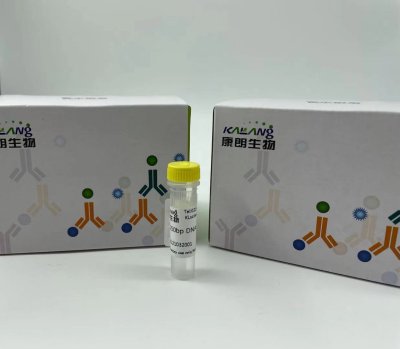
Anti-GNGT1 KL20092-001(50ul)
2021-10-11 -
Anti-GNGT1 antibody(50ul) KL20093-001
2021-10-11 -
MUC5AC (PT2058) mouse Monoclonal Antibody
2021-01-06 -
mOrange mouse Monoclonal Antibody(Mix)
2021-01-05
熱門標(biāo)簽
- Histone H3 rabbit Polyclonal Antibody Histone H3抗體
- EGFR rabbit Polyclonal Antibody EGFR抗體
- Cy3 Conjugated
- AbFluor? 555 Conjugated
- AbFluor? 680 Conjugated
- AbFluor? 350 Conjugated
- AbFluor? 647 Conjugated
- AbFluor? 594 Conjugated
- AbFluor? 405 Conjugated
- Cy5 Conjugated
- AbFluor? 488 Conjugated
- Cyclophilin B抗體 Cyclophilin B Monoclonal Antibody(2B10)
- COX IV抗體 COX IV Monoclonal Antibody(6C8)
- PCNA抗體 PCNA Monoclonal Antibody(12D10)
- FAK rabbit Polyclonal Antibody FAK抗體
QQ:3002763590
電話:021-61998208

掃碼關(guān)注微信公眾號(hào)